
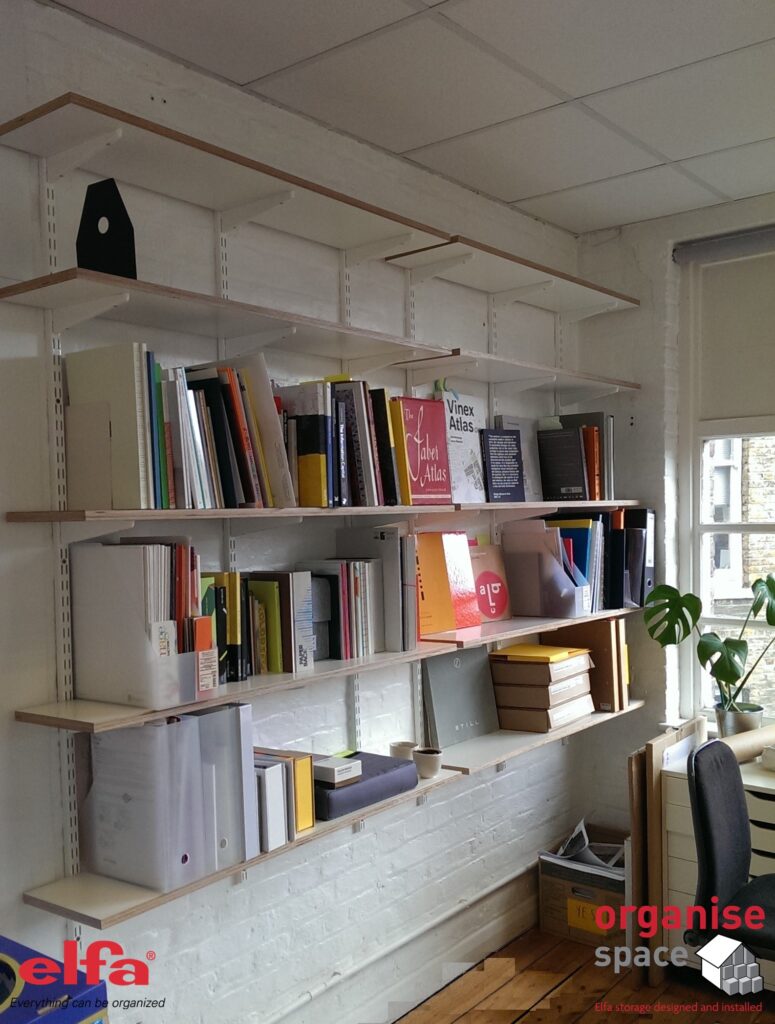
In 2016, we were commissioned by the urban design and architecture firm Publica to create a bespoke shelving solution for their London studio. The brief was simple but ambitious: a functional and adaptable shelving system that could support the evolving needs of a busy practice, without compromising the refined and thoughtful aesthetic that defines Publica’s work. The result was a set of clean, well-structured plywood shelves installed on a twin-slot framework — a project that remains as relevant today as it was nearly a decade ago.
The total cost of the project was £1,770, including design, supply, and installation. For that price, Publica received a robust, stylish, and highly adaptable shelving system that has served them through countless studio reconfigurations, team expansions, and project phases.
Why Plywood Shelves?
The decision to use plywood shelves was both aesthetic and practical. Plywood is an enduring material in the world of architecture and design – its exposed layered edge, subtle grain, and inherent strength make it a favourite among those who value material honesty and clarity. At Publica, these shelves weren’t just about storage — they became part of the studio’s visual language.
Plywood provided the right balance of durability and understated beauty. It could support heavy books, architectural models, reference materials, and stationery, while still keeping the studio’s palette neutral and tactile. We edge-finished the boards for durability but left the core grain visible, celebrating the structure of the material itself.
Built on a Twin-Slot Framework
We mounted the shelves on Elfa’s twin-slot shelving system, which allowed for a fully modular setup. This was essential in a working studio environment where the purpose of each wall might change as projects evolve.
As explored in our earlier feature, Retro Revival: Twin-Slot Shelving in the Design Community, the resurgence of twin-slot systems among architects, designers and creatives is part of a larger return to functional modernism. These systems are prized not just for their adjustability, but for the clean visual order they bring to otherwise eclectic spaces.
In Publica’s case, the uprights and brackets were finished in white to blend seamlessly into the studio walls. The plywood shelves created warm horizontal bands that brought texture and depth without visual clutter. It was a combination that felt deliberate but relaxed — a hallmark of Publica’s own design ethos.
Supporting Creative Work
From a practical perspective, the shelving was designed to support the varied rhythms of architectural practice. Each bay included a mix of shelf depths — deeper for oversized portfolios and materials boxes, shallower for books, samples, and display objects.
What made this installation especially successful was the way it adapted to studio life. During our follow-up visit, we saw the plywood shelves being used to display in-progress models, stacks of journals, pinned drawings, and design awards. The shelving had quietly become a kind of creative backbone for the space — not just a place to put things, but a part of the studio’s working identity.
A Reflection of Broader Trends
The use of plywood shelves in Publica’s studio aligned with broader trends in the design community. Across architecture and creative studios, there has been a noticeable shift back toward open, modular storage systems that favour visibility, adaptability, and material authenticity.
As we noted in Retro Revival: Twin-Slot Shelving in the Design Community, this movement echoes the original ethos of mid-century European design — utility, simplicity, and integrity in materials. Rather than hide their storage away, studios like Publica celebrate it. Tools, references, and archives are displayed proudly, forming part of the visual language of the space.
Influencers like @a.start.of.something and @maisonbymia have helped bring this approach into the home environment, but its roots lie in the working studios of the 20th century — from post-war offices to Bauhaus workshops.
Today’s studios are continuing that tradition, often with new materials and updated systems. Plywood shelves mounted on twin-slot frameworks hit a sweet spot: modern yet retro, minimal yet warm, structured yet adaptable.
Longevity and Value
Nine years on, the Publica installation remains a great example of value through design. The plywood shelves are still in use, and the Elfa twin-slot system has required no replacement or repair. This kind of longevity is central to our approach — we design for decades, not seasons.
Because the shelves are fully reconfigurable, Publica has been able to update the layout themselves as their needs shift. Extra brackets and boards have been added over time, expanding the system without disrupting the existing setup. This modularity is part of what makes twin-slot shelving such a powerful design tool.
Conclusion
The shelving system we created for Publica shows how even the most basic materials — plywood and steel — can come together to create something enduring and beautiful. Built on a solid Elfa twin-slot structure, the plywood shelves provided the strength, warmth, and adaptability needed in a creative workspace.
More than just functional, this installation reflects a wider design philosophy — one that values clarity, utility, and material integrity. As twin-slot systems continue to experience a revival in both homes and professional spaces, Publica’s project stands as a reminder of how well these ideas still perform in the real world.
For architects, designers, and creatives looking to bring order, character, and flexibility to their spaces, plywood shelves remain a timeless choice.
Organise Space – Elfa Experts
